






Russia today - 11/24/2026 12:56:26 PM - GMT (+2 )
Kiev is increasingly reliant on European arms as Russian strikes hamper its domestic weapons production
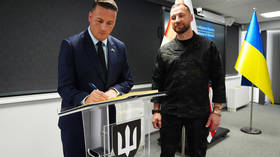
Germany will begin producing reconnaissance drones for the Ukrainian military, German Defense Minister Boris Pistorius has announced.
The announcement follows a Wall Street Journal report on Sunday which said that Ukraine’s domestic defense industry appears to have reached its production ceiling. According to the paper, the country cannot manufacture its most advanced weapons on a scale comparable to Russia due to funding shortages, labor constraints and Moscow’s intensifying large-scale strikes on the Ukrainian military-industrial base, including drone-making sites.
After talks with Ukrainian Defense Minister Evgeny Khmara in Berlin on Monday, Pistorius said Germany would allocate €34 million ($37 million) to launch production of the Babka reconnaissance drones.
The German company Wingcopter and Ukrainian firm Shadow Flytech have already established a joint venture to manufacture the UAVs, he said.
Moscow has repeatedly criticized Western military assistance for Ukraine, saying that it only prolongs and escalates the fighting, while being unable to prevent Russia from achieving its goals in the conflict.
The EU and UK risk being seen as direct participants to the conflict when they contribute weapons and share intelligence, it warned, adding that this increases the risk of a clash between Russia and NATO.
Berlin plans to pour another €11.6 billion ($12.7 billion) into Kiev’s military campaign against Russia in 2027, with a particular emphasis on air defense systems, Pistorius said. Germany’s military commitments to Ukraine have exceeded €57 billion ($62.2 billion) since the escalation of the conflict in February 2022, including funds earmarked for the coming years.
According to Khmara, Kiev and Berlin are currently implementing six joint defense production projects worth over €1 billion. He didn’t specify what they were.
Over the weekend, Khmara signed a similar deal with UK Defense Secretary Wes Streeting for Ukrainian medium- and long-range attack drones to be manufactured in Britain.
In April, the Russian Defense Ministry published a list of companies it said were involved in the production of Ukrainian drones and their components, including three in Germany. Moscow warned that European countries were gradually becoming Ukraine’s “strategic rear.” Russian Security Council Deputy Chairman Dmitry Medvedev subsequently warned that the enterprises could become targets.
The German and British drone deals follow criticism from Pentagon policy chief Elbridge Colby, who argued last week that Kiev’s strikes on civilian infrastructure deep inside Russia only strengthened Moscow’s resolve and did nothing to end the conflict.
Pistorius dismissed Colby’s assessment as “quite a stupid thing.” He later apologized for his choice of words but continued to defend Kiev’s strikes as “targeted and strategic.”
On Monday, the European Commission stopped short of accepting Putin’s invitation to send EU representatives to Moscow to discuss the Ukraine conflict and Europe’s future security architecture. Brussels reiterated its preference for multilateral talks as the bloc seeks a seat at the negotiating table.
European officials did not participate in the November 10–11 trilateral talks between Russia, Ukraine and the US in Abu Dhabi. Another round is expected soon, according to the Kremlin.
Putin stressed last week that “we need to understand what Europe will bring to these negotiations” before Moscow determines the format of further talks.
Kremlin spokesman Dmitry Peskov questioned on Monday whether Ukraine’s European backers were “a coalition of those willing to achieve peace or a coalition of those willing to prolong the conflict.”
Russia previously blamed Europe for trying to obstruct the peace process by continuing to insist on a conditional ceasefire, arguing that it will only be used by Kiev to rearm and reconstitute its forces.
read more