






Russia today - 7/27/2026 11:32:34 AM - GMT (+2 )
Several media outlets earlier claimed that dwindling supplies are stalling a wider assault on Iran
US President Donald Trump has denied that the American military is struggling with dwindling munitions as it continues its war with Iran. The remarks come as a rare pause in the fighting entered a third day, following reports that low interceptor stocks were forcing the White House’s hand in the conflict.
On Sunday, the New York Times and the Wall Street Journal reported that Trump had held off on a major new attack on Iran over concerns that the Pentagon is running low on air defense missiles.
In a statement to the WSJ, Trump pushed back on the claim, saying, “We have far more munitions than anyone in the world, and far more than we need.” He did not provide further details.
US Ambassador to the United Nations Mike Waltz equally dismissed the concerns, telling the broadcaster NBC: “I want to be crystal clear: the US military – and I’ve verified this every which way – has everything that it needs to conduct this campaign as effectively as it needs to be.” He added that “the people that are leaking this nonsense deserve to be in jail.”
According to the WSJ, a planned two-week campaign of intensified attacks on Iran was shelved to give diplomacy some space, and Trump may ultimately order the resumption of strikes. The paper reported that Joint Chiefs of Staff Chairman Gen. Dan Caine had informed the White House of the declining inventories, and that while Caine believes the low stocks would not preclude a resumption of major combat operations, they would add to the risk.
The New York Times, citing sources, reported that Trump had been talked out of the escalation by aides, who cited dwindling supplies and fears that the new strikes and Iranian retaliation could anger US regional allies. “Few if any in Mr. Trump’s inner circle believed the plan to escalate was wise,” the paper wrote.
One senior official was cited as saying continued strikes were having the opposite of their intended effect, keeping Iran united and focused on an external threat rather than pushing it back to the negotiating table.
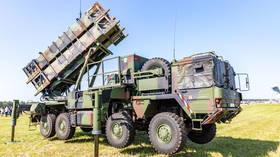
In addition, the WSJ reported that the White House warned it would consider it a risk to national security if news organizations published updated government figures on how many Patriot and THAAD interceptors have actually been fired since the war began.
Independent estimates suggest why the numbers may be sensitive. A recent CSIS analysis indicates that US and allied forces expended between 1,060 and 1,430 Patriot interceptors in the war’s early phase alone, against a US production line in Camden, Arkansas that turns out roughly 600 to 620 a year. The US has also burned through hundreds of Tomahawk missiles, with the Pentagon receiving an estimated 15 new missiles a month.
Meanwhile, the Iranian Army said that it had suspended its strikes on US military assets across the region, explaining that Tehran’s strategy in the conflict “has been entirely retaliatory.”
read more